Mortgage Guide
How Much Money Do You Need to Buy a Home Besides the Down Payment?
Build a homebuying cash plan that separates closing costs, prepaids, earnest money, moving expenses, and the savings you want to keep after closing.
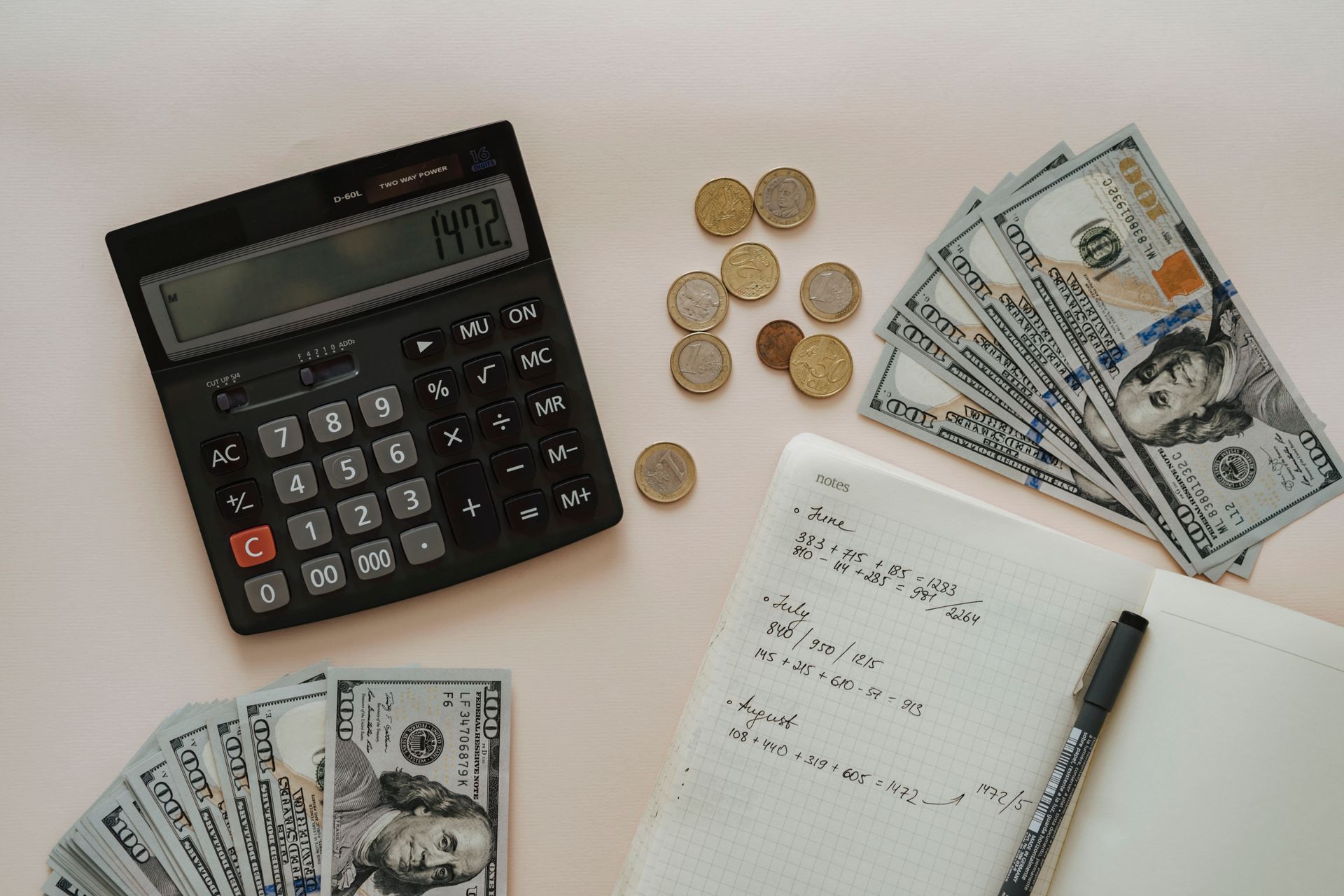
How much money do you need to buy a home besides the down payment?
Plan for transaction charges, prepaid expenses, and any initial escrow deposit, plus money for inspections, moving, and savings after closing. Cash to close combines your down payment and closing costs, then accounts for deposits already paid, eligible credits, and other adjustments. Earnest money is part of your purchase funds, not an extra down payment. Your lender may also require assets to remain after closing.
Saving the down payment is one milestone. Having enough money to complete the purchase and still feel comfortable afterward is a separate calculation.
I suggest answering two questions: How much of your own money will the purchase use, and how much should remain available after the move? The lender's cash-to-close figure helps with the first question, but it does not cover your entire household cash plan.
This post focuses on money needed to buy a house besides the down payment. For the broader monthly-payment and income discussion, use my guide to how much income you need for a $600,000 home.
Separate your down payment from the other costs
Your down payment is the portion of the purchase price you contribute rather than finance. Then identify three groups of expenses. The CFPB's mortgage-cost overview explains the different categories.
- Transaction charges: These can include lender charges, an appraisal, title and escrow services, recording charges, and any other buyer-paid costs that apply to your transaction. Include discount points if the loan option you choose has them. Confirm any separate buyer-agent payment obligation, too.
- Prepaid expenses: These pay particular expenses in advance, such as homeowners insurance and interest for the applicable days around closing. The closing date and the actual insurance quote affect the amounts.
- Initial escrow funding: If an escrow or impound account is required, an initial deposit starts the balance for future tax and insurance bills. The CFPB identifies this separately as Initial Escrow Payment at Closing.
For budgeting, separating these groups makes the numbers easier to understand. On the Loan Estimate, however, prepaids and initial escrow funding are already included in the form's closing-cost total. Do not add them again on top of that total.
Find the right numbers on your Loan Estimate
Use the CFPB's Loan Estimate explainer alongside your own form. On page 2, Sections A through C itemize loan costs. Section F lists prepaids, and Section G lists initial escrow funding. Section J totals closing costs after lender credits.
The Calculating Cash to Close box then brings together closing costs, down payment, deposit, seller credits, and other adjustments. Page 1 summarizes the estimated cash to close. Use those figures together rather than treating every line as another bill to add.
A property-specific estimate matters. Ask for the actual insurance quote, the tax basis being used, the planned closing date, and the number of escrow months collected. FHA, VA, and USDA financing can involve different upfront program charges and financing treatment; confirm the selected loan program before using a conventional example.
A cash worksheet with earnest money credited once
The following is an illustration of the accounting, not a fee quote. Insert your actual down payment. The other dollar figures are made-up examples, not California averages or tax and insurance estimates.
Assume an owner-occupied conventional purchase with an escrow account, no costs financed, no additional prorations, and the stated credits permitted and available for the transaction. In this example, all charges in the closing worksheet are still payable at closing.
- A. Down payment: Your actual required amount.
- B. Transaction charges before credits: $7,000.
- C. Prepaid expenses: $1,800.
- D. Initial escrow funding: $2,200.
- E. Gross closing costs, B + C + D: $11,000.
- F. Lender credit, subtracted once: $1,000.
- G. Closing costs after lender credit, E minus F: $10,000.
- H. Eligible seller credit, subtracted once: $3,000.
- I. Earnest money deposit already paid, credited once: $5,000.
- Remaining cash due at closing, A + G minus H minus I: Your down payment plus $2,000.
The purchase uses your down payment plus $7,000 of your own money for closing costs after the two credits. You already supplied $5,000 through the deposit, so the remaining amount due is lower. The deposit is not free money or another fee.
The deposit treatment follows the Loan Estimate's cash-to-close calculation, which shows the purchase deposit as a subtraction. If you copy Section J from an actual Loan Estimate, its lender credit is already reflected; do not subtract that credit a second time.
Budget for expenses paid before closing
An inspection may be paid when it is performed, and an appraisal may be collected before closing. Track each payment by description, amount, date, and whether it appears on your mortgage disclosures.
For example, if an appraisal is already included in your closing-cost total and you paid it earlier, reconcile that payment with the lender and escrow officer. Do not count the same appraisal again as a separate expense. Keep receipts and confirm how amounts paid before closing appear on the final disclosure.
For our illustration, set aside another $500 for an inspection paid separately, outside the closing worksheet above. This is an example amount, not an inspection quote.
Keep moving money and your cushion outside cash to close
The CFPB's down-payment planning guidance recommends setting aside funds for moving, initial home expenses, and an emergency cushion before deciding how much cash to commit to the purchase.
Continue the illustration with $2,000 for moving and setup and $6,000 you intend to keep available afterward. These are personal planning amounts, not lender requirements or recommendations for every household.
Before paying the deposit or inspection, the example's starting funds would need to cover:
- Your down payment plus $7,000 of net closing costs.
- The separate $500 inspection.
- $2,000 for moving and setup.
- $6,000 retained as a cushion.
That is your down payment plus $15,500. This total already includes the money later used for the earnest money deposit. Adding another $5,000 deposit on top would count it twice. After any payments, update the worksheet using your remaining balance and remaining obligations.
Required reserves and your emergency savings
Homebuyer reserves are assets the lender requires to remain after closing. They are not another amount you automatically send to escrow. Under Fannie Mae's reserve framework, funds needed to close are removed before evaluating remaining assets, and requirements depend on the transaction and underwriting result.
Ask for the reserve requirement on your selected loan, including any lender-specific requirements. The same remaining savings may support both a lender reserve requirement and your personal cushion; do not automatically add identical balances twice. But money earmarked for immediate spending will not remain available as a cushion. Also, an asset acceptable for underwriting may be less convenient for emergencies than a bank balance.
Compare credits with the full loan cost
Seller credits can reduce eligible expenses when the contract and loan rules permit them. For Fannie Mae financing, interested-party contributions cannot fund the buyer's down payment or required reserves. Do not assume a promised credit can cover every dollar you need.
A lender credit can involve a higher interest rate compared with an otherwise comparable option without that credit. Ask for the cash and payment comparison. My guide to what determines your mortgage interest rate provides the broader pricing context.
Turn the worksheet into your own cash plan
Before committing funds, ask for an itemized estimate using the property, loan program, insurance quote, tax assumptions, closing date, and credits that actually apply. Then reconcile the Closing Disclosure with your deposit and any earlier payments before sending the remaining funds.
Ask me for a cash-to-close worksheet for your price range. We can separate the money needed to complete the purchase from the amount you want left afterward.
Frequently asked questions
Are closing costs included in the down payment?
No. The down payment goes toward the purchase price. Closing costs cover other transaction and ownership-related expenses. On a Loan Estimate, total closing costs include prepaids and initial escrow funding, so avoid adding those categories again on top of the form's total.
Is earnest money an extra cost on top of my down payment?
In a purchase that closes, the earnest money deposit is credited in the cash-to-close calculation. It is part of the funds you already supplied, not a second down payment. Include it in your total purchase funds, then subtract it once when calculating the amount still due at closing.
Why do I pay prepaids and an initial escrow deposit?
Prepaids cover particular expenses in advance, such as insurance or interest for applicable days. Initial escrow funding starts an account used for future bills, when required. Both can be collected in the same transaction for different purposes; ask the lender to explain the coverage dates and escrow calculation.
Can a seller credit pay my down payment or reserves?
Do not assume so. For Fannie Mae financing, interested-party contributions cannot fund the buyer's down payment or required reserves. Their use and limits depend on the selected loan and transaction. Have the lender review the proposed credit before relying on it in your budget.
Are lender reserves the same as the money I bring to closing?
No. Required reserves are eligible assets that remain after the purchase closes. The requirement depends on the loan and underwriting result. Your personal emergency cushion may overlap with those assets, but it should also reflect your actual expenses, planned spending, and access to the money.
Should I add moving costs to my Loan Estimate's cash to close?
Keep moving costs in your overall homebuying budget as a separate allocation. The lender's cash-to-close figure is not a complete estimate of your move or your emergency savings. Budget for those needs in addition to the remaining funds required to close, without counting deposits or expenses already paid twice.
Sources
- Loan Estimate sections and cash-to-close explainer — Consumer Financial Protection Bureau
- Mortgage costs, prepaids, and other homebuying expenses — Consumer Financial Protection Bureau
- Initial escrow deposit and Section G — Consumer Financial Protection Bureau
- Loan Estimate calculation: deposit, lender credits, and cash to close — Consumer Financial Protection Bureau — Regulation Z
- Closing Disclosure and amounts already paid — Consumer Financial Protection Bureau
- Planning available funds, moving expenses, and an emergency cushion — Consumer Financial Protection Bureau
- Minimum Reserve Requirements — B3-4.1-01, dated August 7, 2024 — Fannie Mae Selling Guide
- Interested Party Contributions — B3-4.1-02, dated May 7, 2025 — Fannie Mae Selling Guide
- Points and lender credits: cash and rate tradeoffs — Consumer Financial Protection Bureau
Related articles
Mortgage Guide
How Much Income Do You Need to Buy a $600,000 Home?There is no single income requirement for a $600,000 home. Learn how your down payment, loan terms, property taxes and other monthly debts affect the answer.
Mortgage Guide
What Determines Your Mortgage Interest Rate?Your mortgage rate depends on the loan, your finances and the market. Learn how credit, down payment, loan terms, points and rate locks affect your options.